
How does lysolecithin improve the animal feed?

lysolecithin, lecithin, livestock, poultry, swine, aqua, fish

We can’t emphasize enough how important lysolecithin is to create better animal feed.

Since feed formulations adds between 3 – 8% oils and on top of that, fats and grains also contains oils and fats, it is an enormous amount of fats to digest using only internal emulsifiers. Without help of external emulsifiers, a big amount of fats will not be digested nor absorbed. It is important include an emulsifier that will maximise the main function – the digestibility and absorption of lipids.

But what emulsifier to include?

In the case of emulsification power, GN Good Nutrition lysolecithin is far superior to lecithin to digest lipids (fats and oils) and superior nutrient absorption.
More articles
meat for family
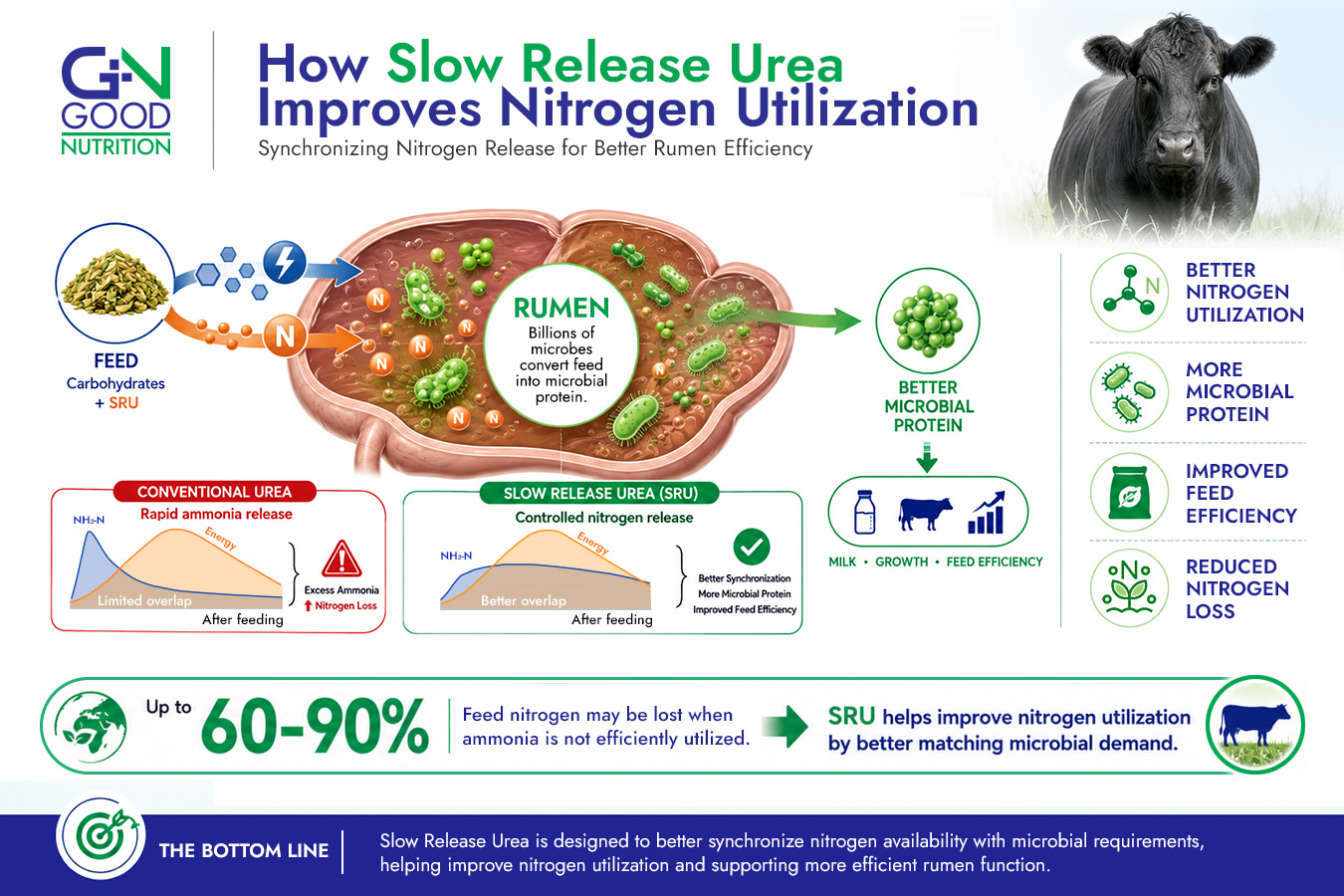
The Meat on Your Table Carries a Deeper Story
Today, families everywhere are feeling the pressure of rising food costs. Meat, once a staple, is becoming something people think twice about. The question is no longer just what to cook, but how to balance nutrition with affordability. What many do not see is that the answer to this challenge does not begin at the supermarket. It begins at the farm, at the level of animal nutrition.
lysolecithin in low fat diets
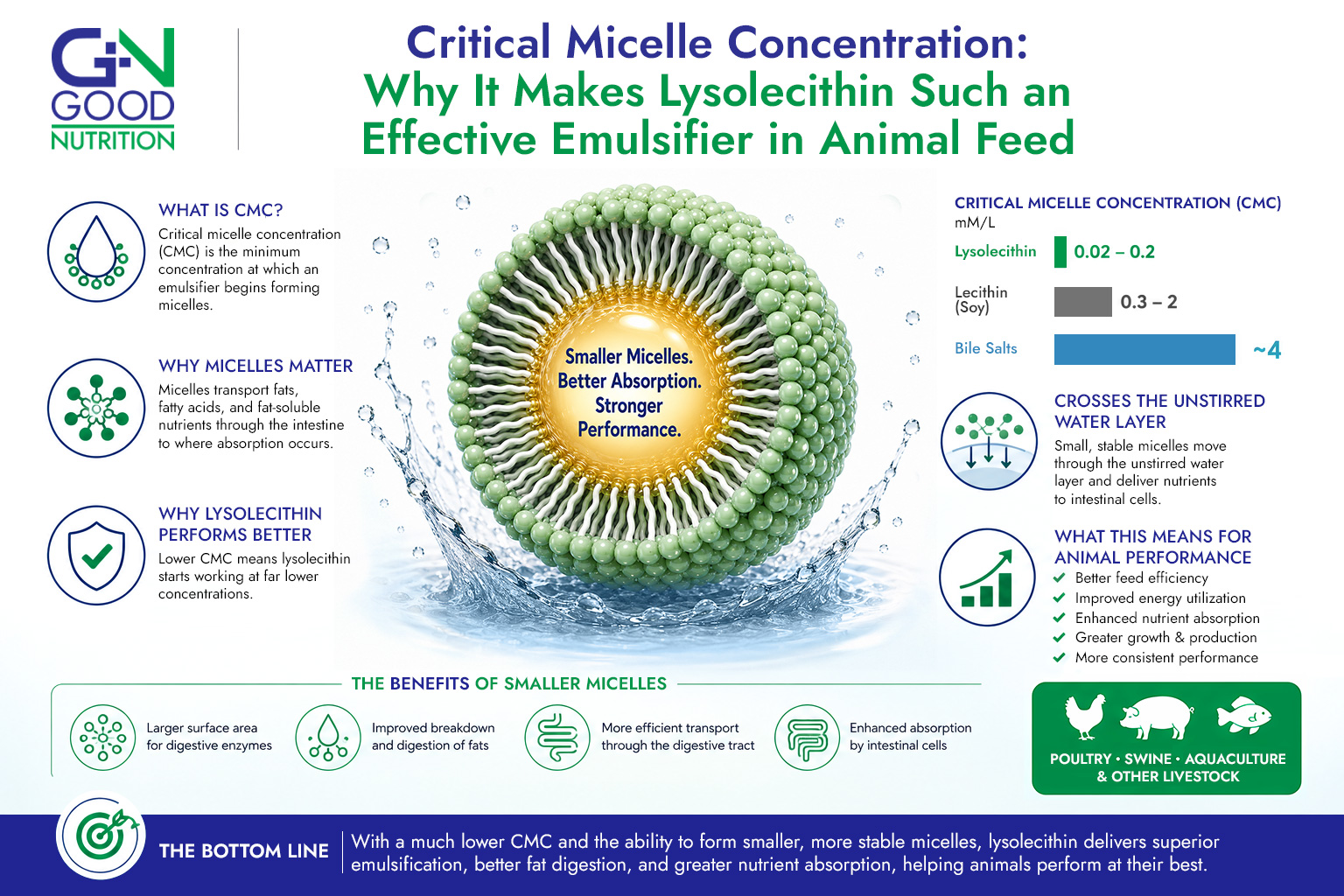
Is Lysolecithin Still Effective in Low Fat Diets? The Science Explained
In animal nutrition, lysolecithin is often associated with improving fat digestion, especially in high oil diets. But a common question remains: does it still deliver value when fat inclusion is low or when no additional oil is added?